
Shaping a clear solution concept and value hypothesis.
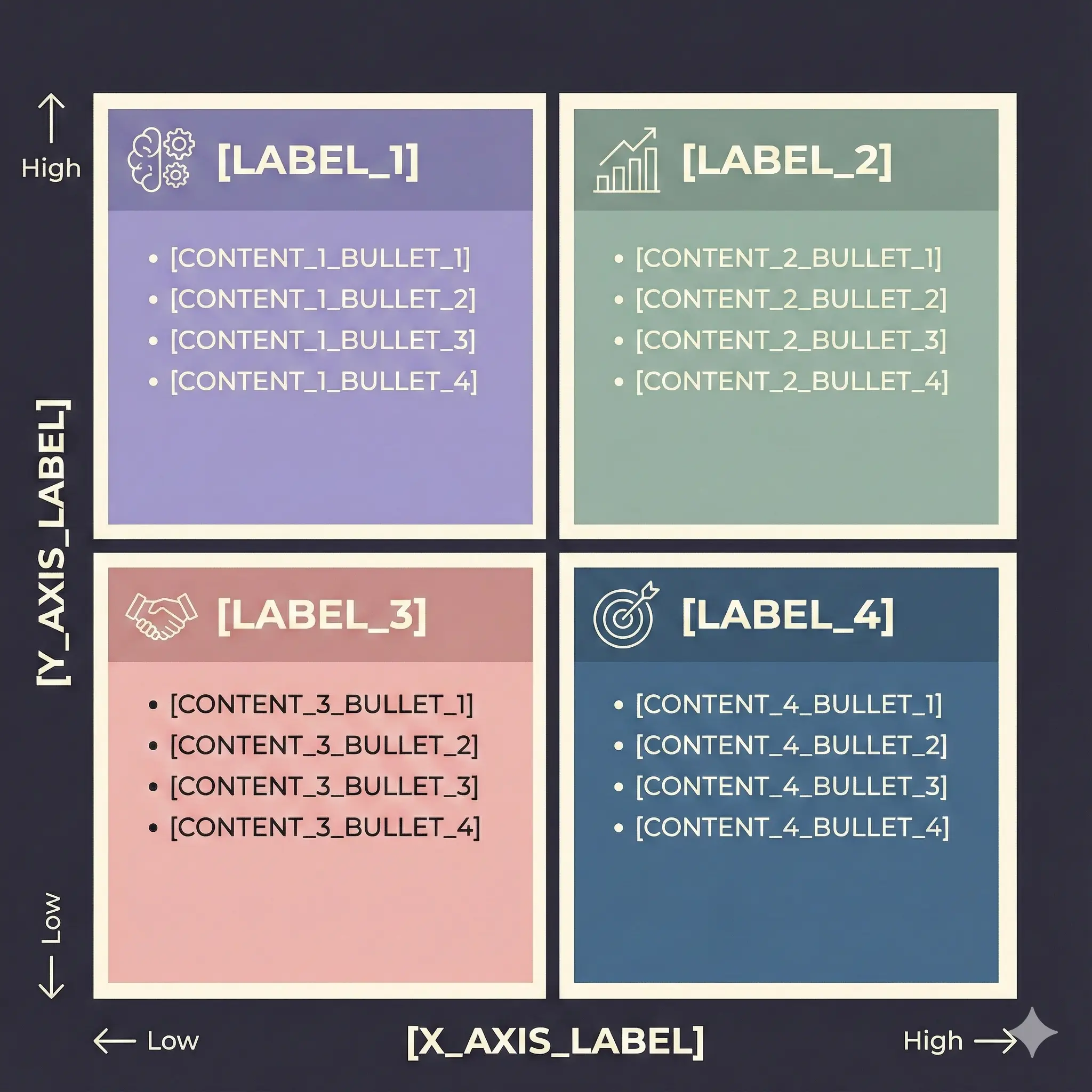
The 2x2 Matrix is a simple yet powerful tool for decision-making and analysis, helping to categorize and prioritize options.
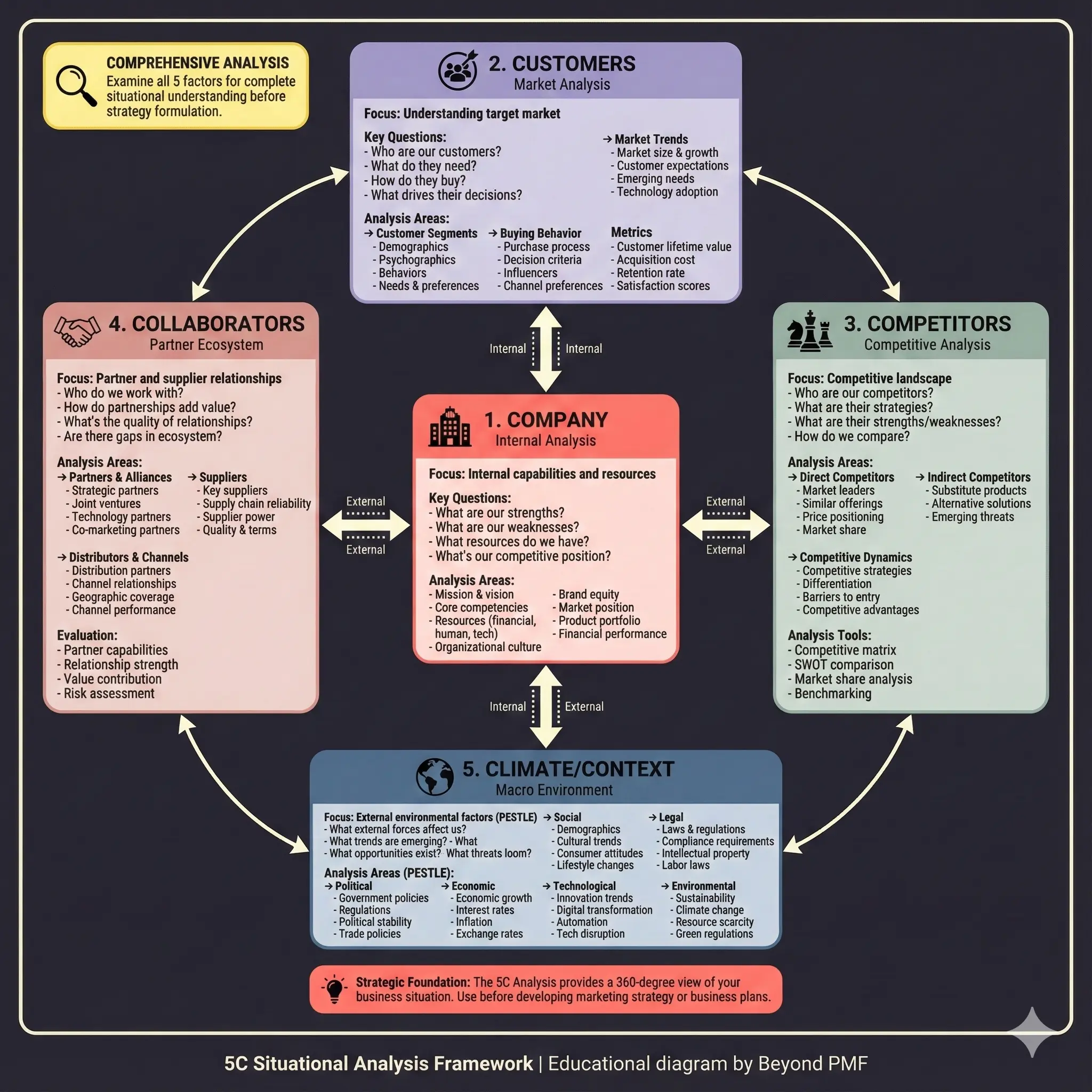
5C Analysis is a comprehensive framework used by businesses to understand their internal and external environments.
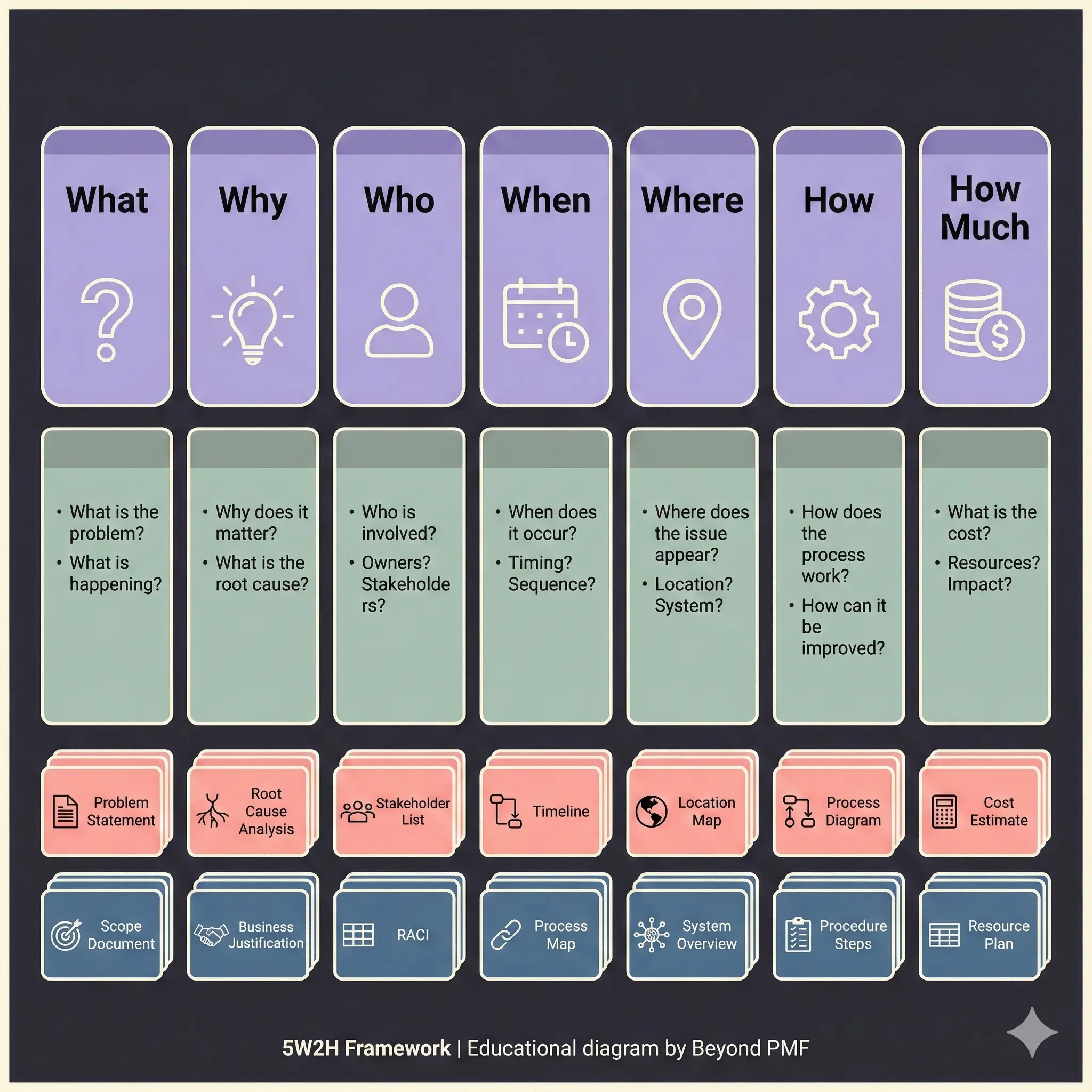
The 5W2H Framework is a methodical tool used for problem-solving and process improvement by analyzing seven key aspects of a situation or problem.

Affinity Mapping is a collaborative technique used to organize and categorize information into groups based on natural relationships.
Amazon's Working Backwards is a product development approach that starts with the customer's needs and works backwards from there.
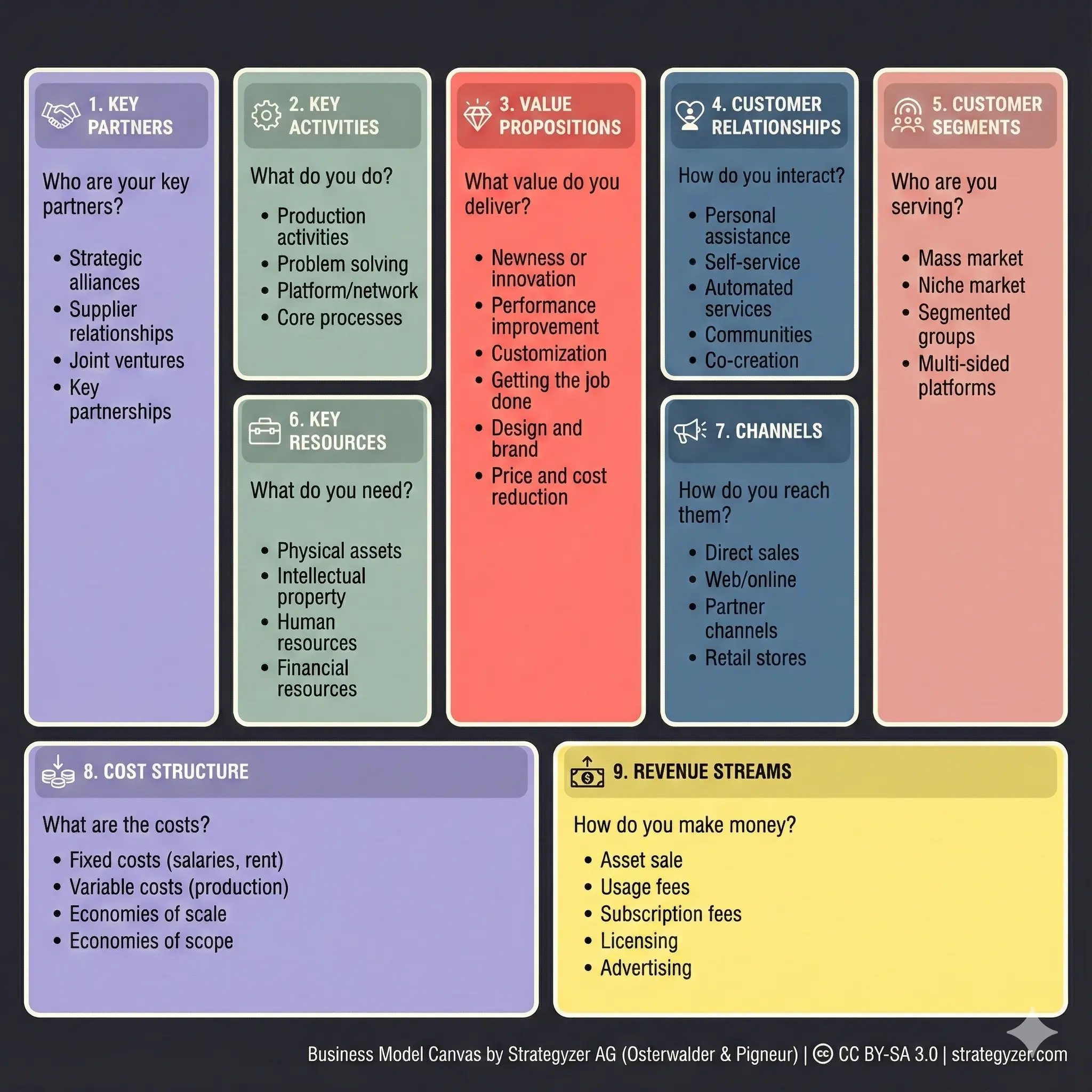
The Business Model Canvas is a strategic management tool for developing new or documenting existing business models.
The Candle Problem Framework is a tool used to analyze and enhance creative problem-solving in business settings.
The Core-Adjacent-Transformational (CAT) framework helps businesses categorize and prioritize their innovation initiatives into core, adjacent, and transformational projects.
The Creative Problem Solving Framework is a process designed to approach and resolve challenges through innovative thinking and ideation.
DIE Scoring is a framework used to assess the Difficulty, Importance, and Engagement of tasks or projects.
The Design Thinking Diamond is a framework that emphasizes divergent and convergent thinking to explore and refine ideas.
Discovery-Driven Planning is a strategic approach that focuses on learning and adaptation for projects with high uncertainty.
The Double Diamond Model is a visual, structured approach to design and innovation, emphasizing divergent and convergent thinking in two phases.
First Principles Thinking is a problem-solving approach that breaks down complex problems into basic elements and then reassembles them from the ground up.
The Fuzzy Front End (FFE) is the initial phase of product development, characterized by high uncertainty and creativity.
Gamestorming is a set of co-creation tools used by innovators around the world.
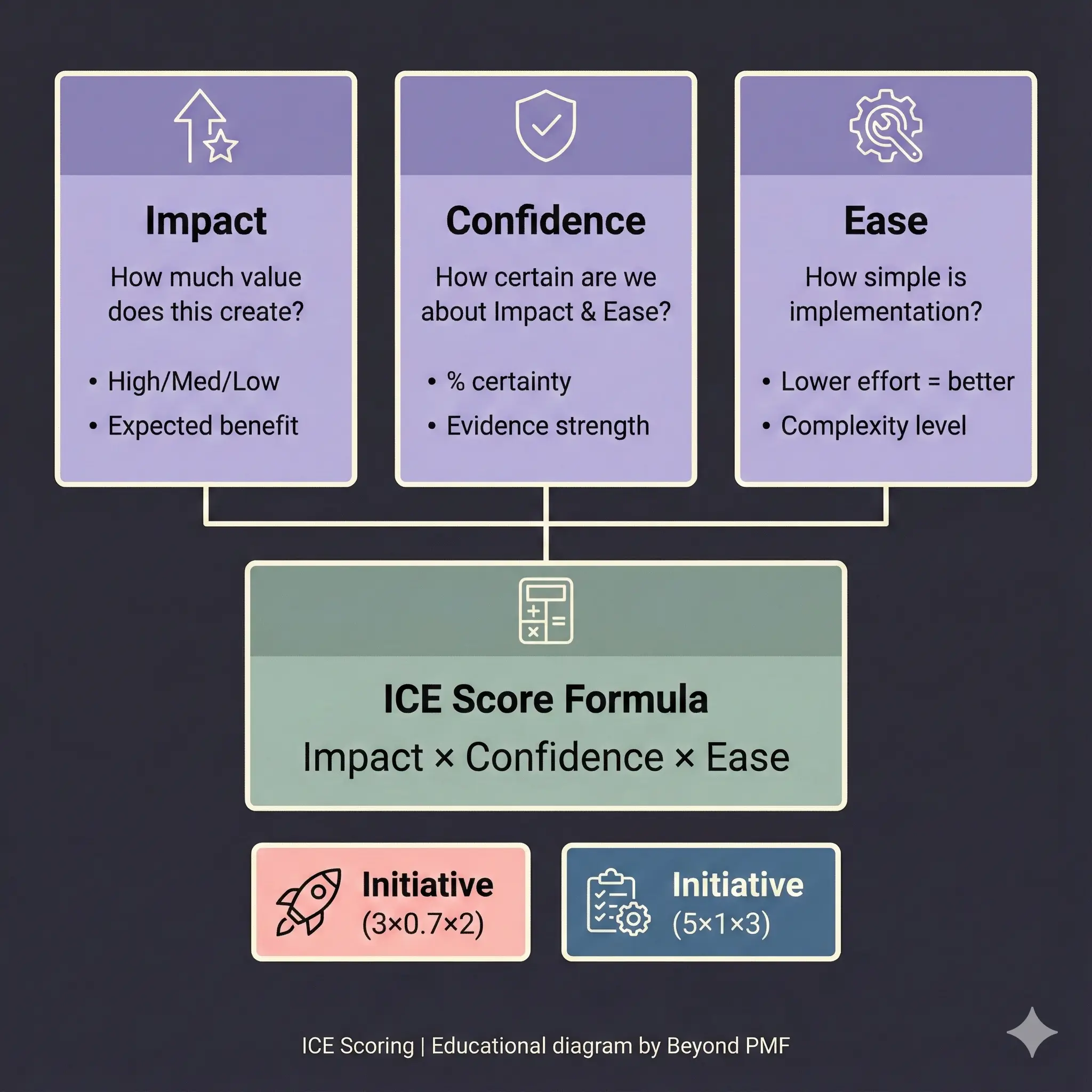
ICE Scoring is a prioritization tool used to evaluate projects or ideas based on Impact, Confidence, and Ease.
The Inception Deck is a framework used to align project team members and stakeholders at the start of a project.
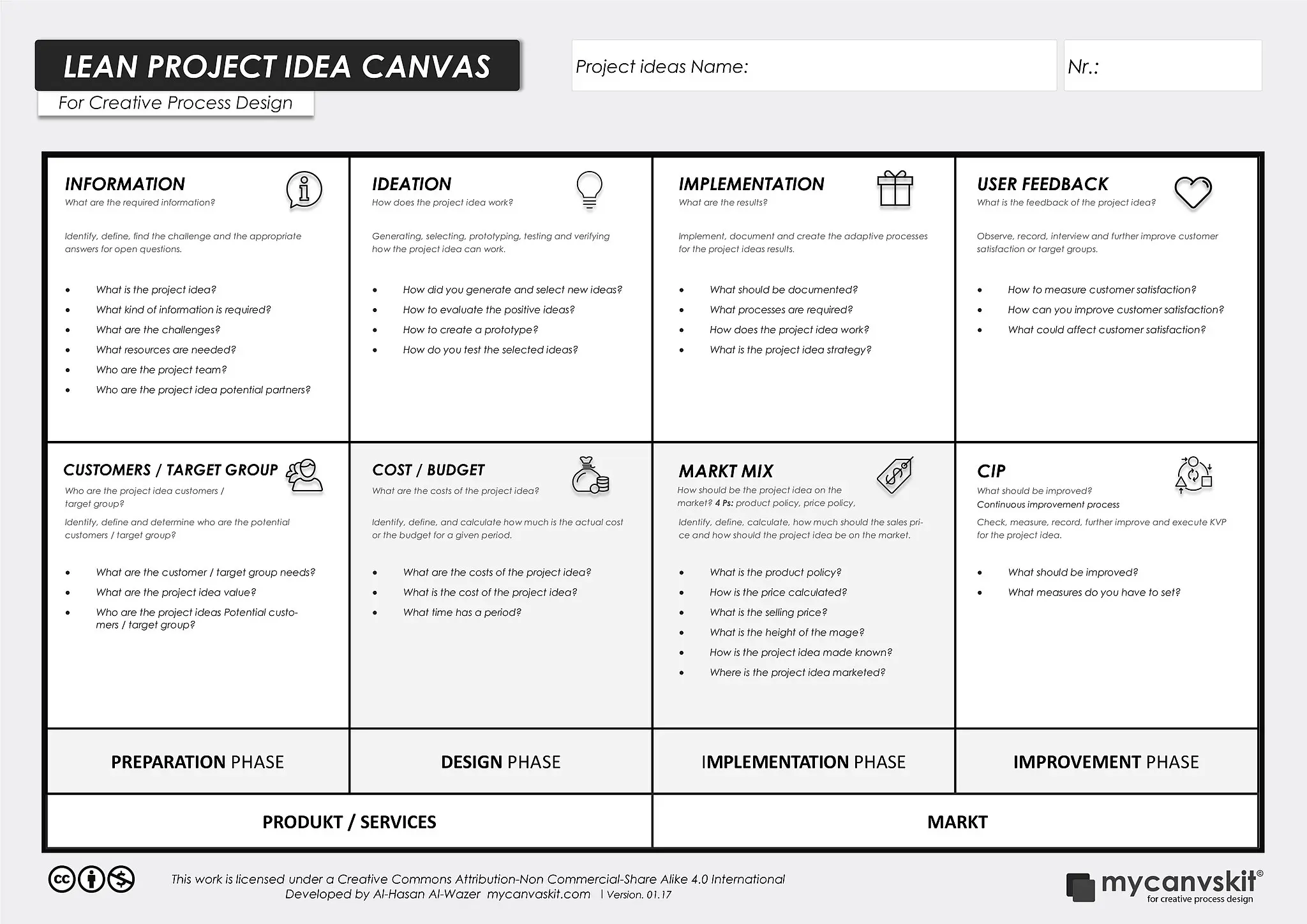
Lean Canvas is a streamlined adaptation of the Business Model Canvas, tailored specifically for startups to assess and iterate business ideas quickly.
Lean Inception is a collaborative framework used to align team members and stakeholders on the vision of a product before starting its development.
Lightning Decision Jam (LDJ) is a structured problem-solving session designed to bypass lengthy discussions and directly generate actionable solutions.
The Nominal Group Technique (NGT) is a structured method for group brainstorming that encourages contributions from everyone.
The Opportunity Canvas is a strategic tool used to assess and prioritize business opportunities.
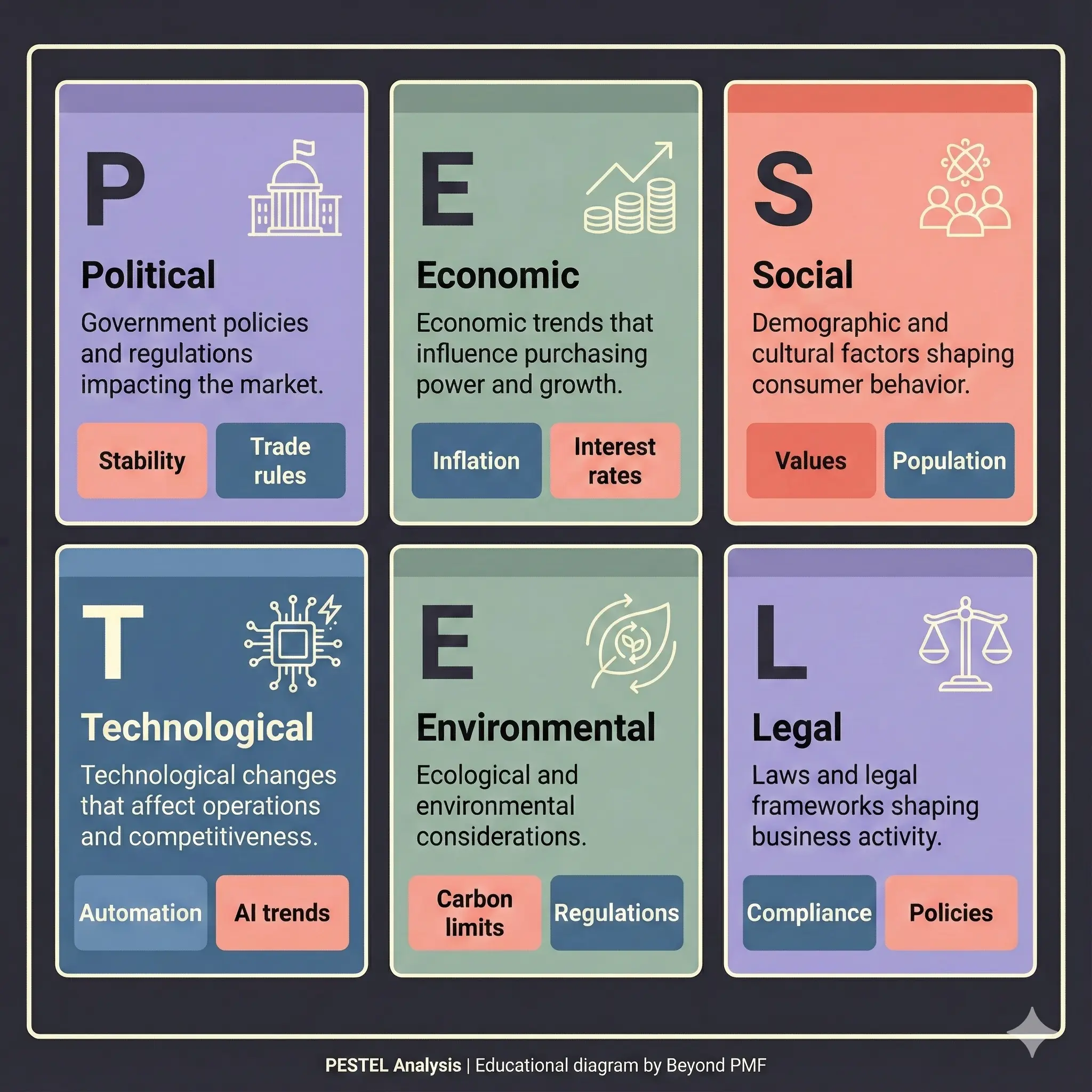
PESTEL Analysis is a tool used to analyze and monitor the macro-environmental factors that may have a profound impact on an organization's performance.
The Product Vision Board is a visual tool used to outline and validate a product's vision and strategy.
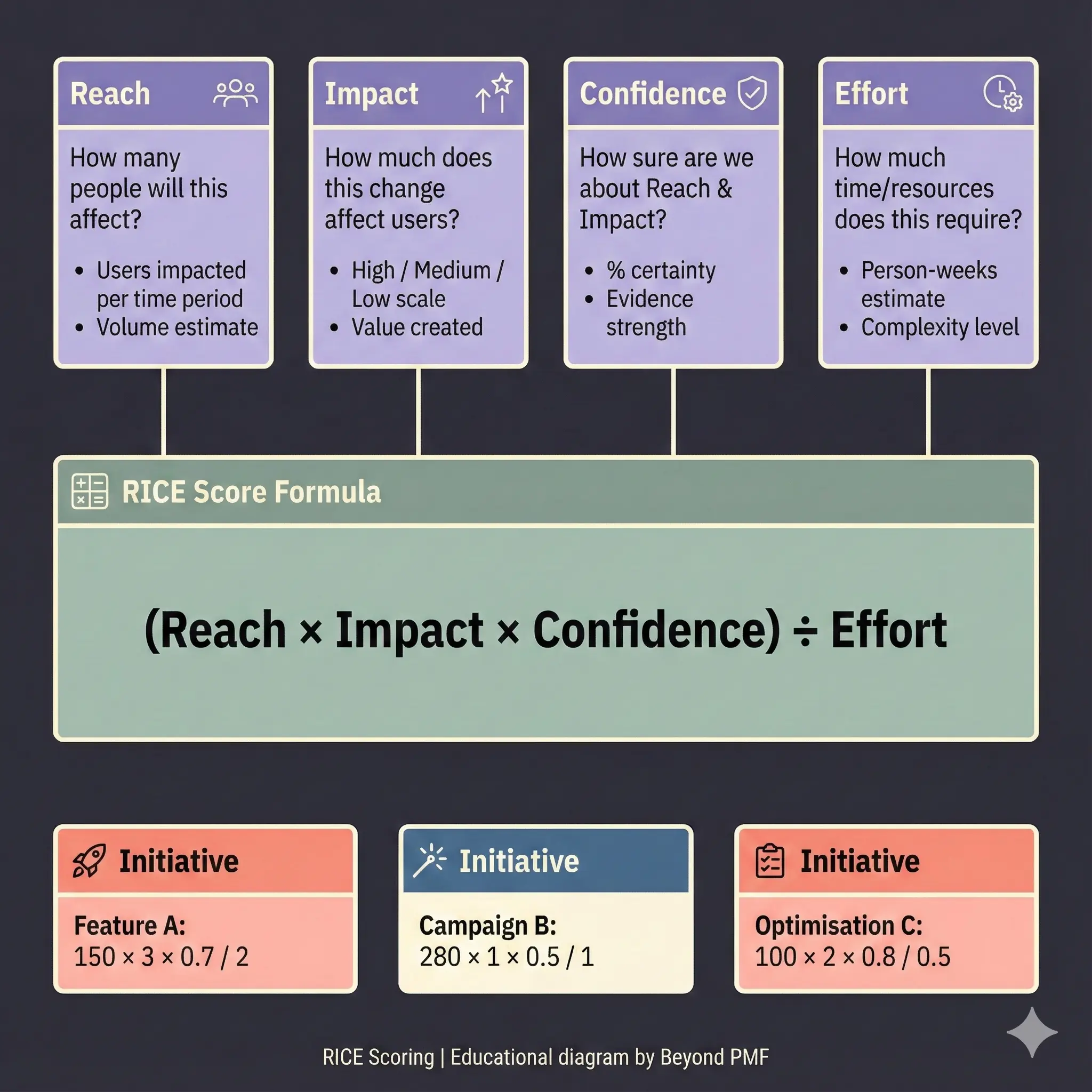
RICE Scoring is a prioritization framework used to evaluate and rank project ideas or features based on four factors: Reach, Impact, Confidence, and Effort.
The Risk-Reward Matrix is a decision-making tool that helps evaluate the potential risks and rewards of different options.
The SCAMPER Technique is a creative thinking tool that helps generate ideas for product improvements and innovations.
The SLEPT / STEEP / STEEPLE framework is a strategic tool used for analyzing external environmental influences on an organization.
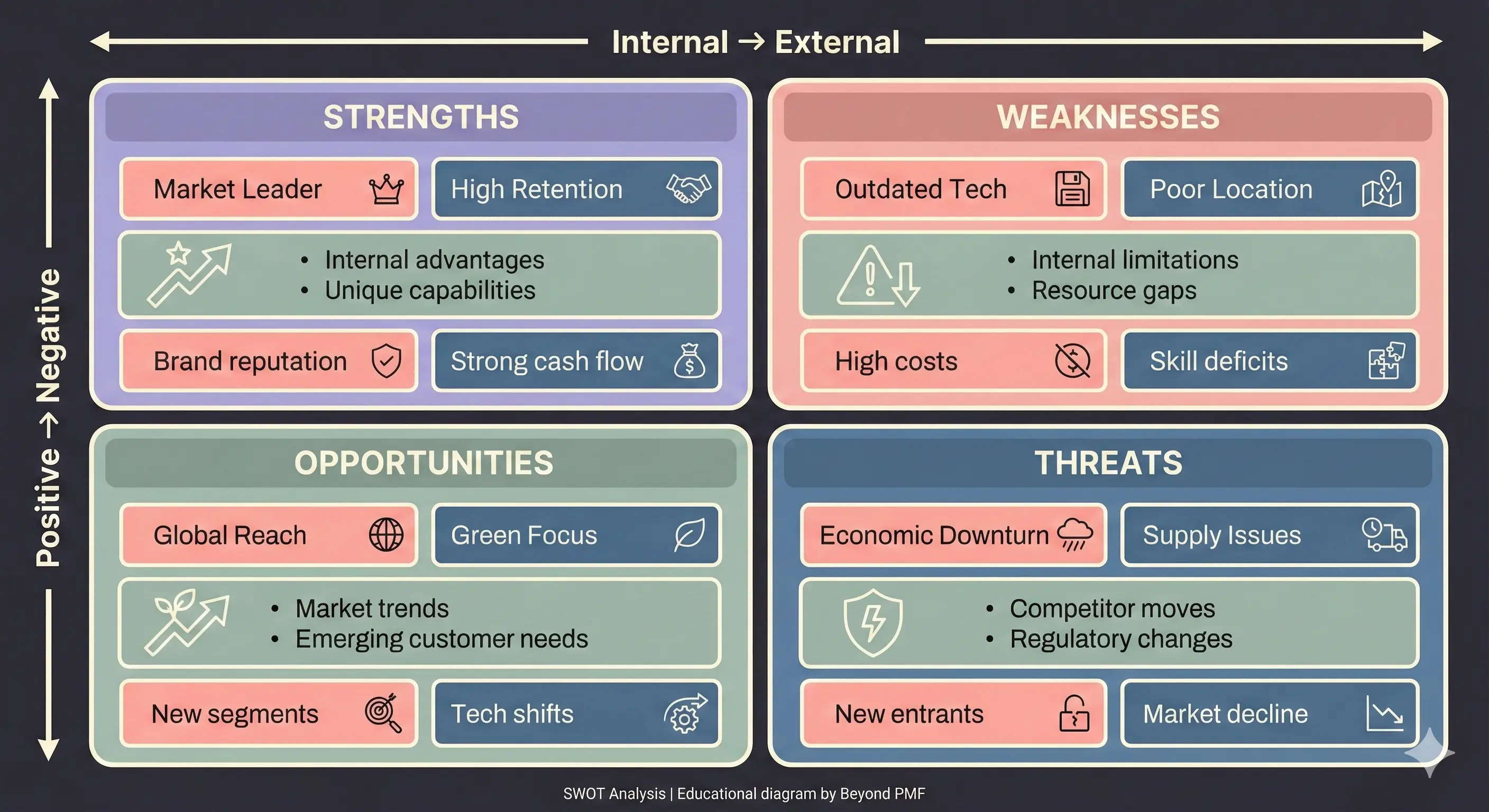
SWOT Analysis is a strategic planning tool used to identify and understand Strengths, Weaknesses, Opportunities, and Threats related to business competition or project planning.
The Six Thinking Hats is a decision-making framework that simplifies and streamlines discussions by assigning different thinking styles to participants.
Speculative Design is a creative approach used to explore and critique possible futures by envisioning radical scenarios and provocative artifacts.
The Strategic Canvas is a visual tool used in Blue Ocean Strategy to map out current market conditions and identify new opportunities for growth.
A System Context Diagram (SCD) visually maps the scope of a system at a high level.
TAM-SAM-SOM is a market analysis framework that helps businesses identify and quantify their target markets at different granularities.
The TCO Model helps businesses calculate the total cost of purchasing and operating a product or system over its entire lifespan.