
Scaling adoption, impact, and value creation.
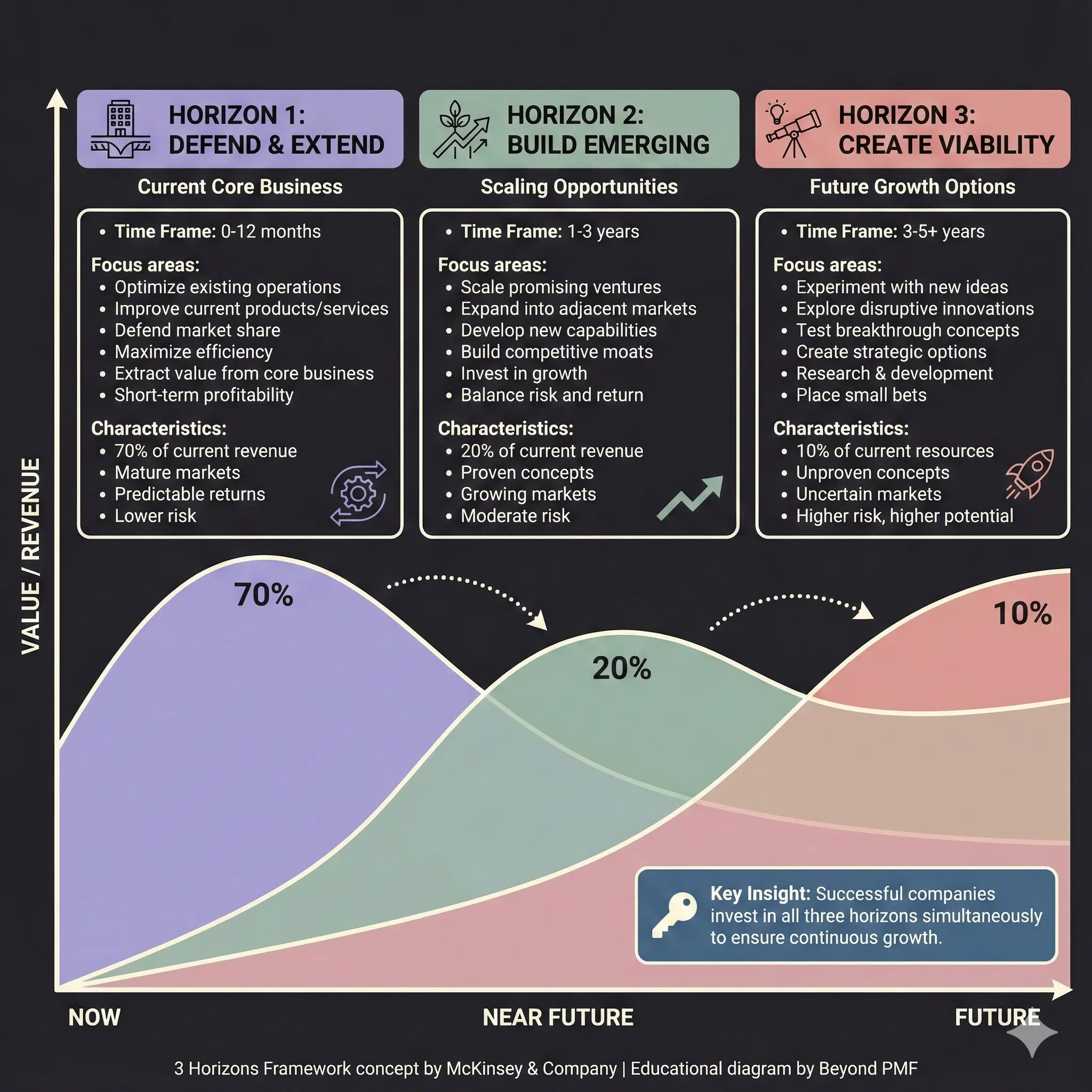
The 3 Horizons Framework helps organizations manage current operations while fostering future growth. It balances short-term and long-term goals.
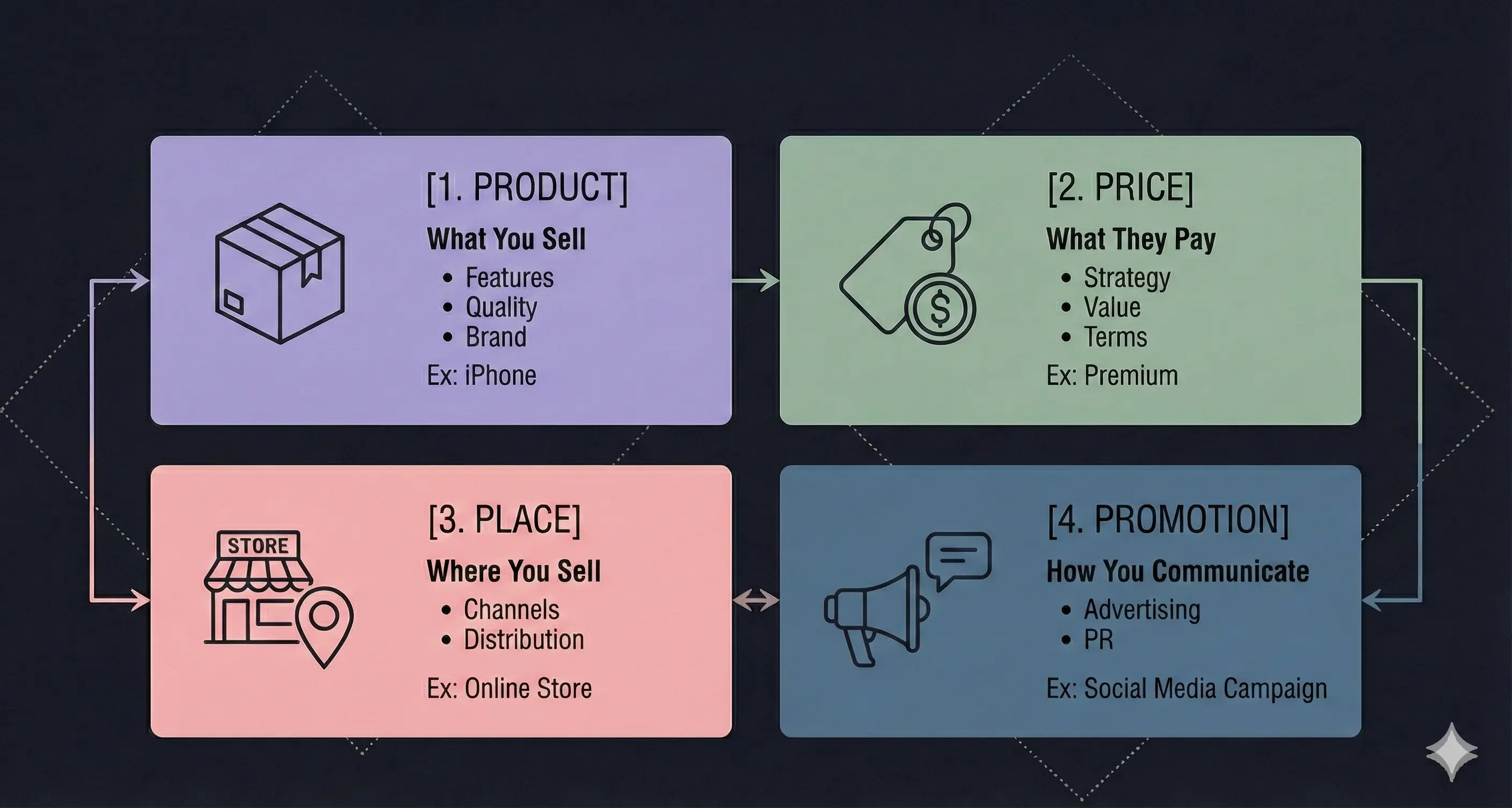
The 4Ps Marketing Mix is a model used to enhance marketing strategies through four key components: Product, Price, Place, and Promotion.

The 7Ps Marketing Mix is an extension of the traditional 4Ps model, designed to offer a more comprehensive marketing strategy by including three additional elements.
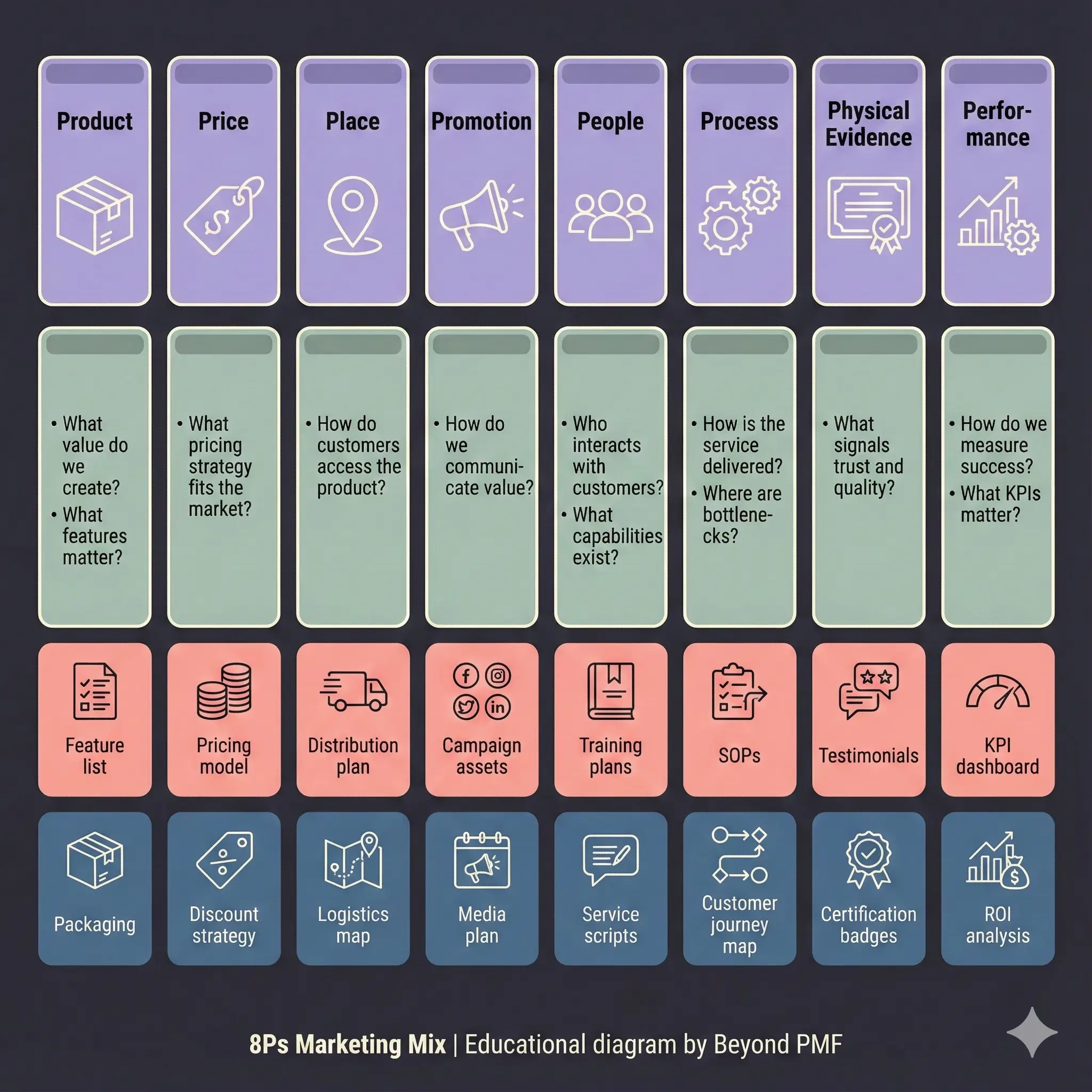
The 8Ps Marketing Mix is an expansion of the traditional 4Ps, providing a more detailed approach to marketing strategy by addressing additional aspects that are crucial in the modern market.
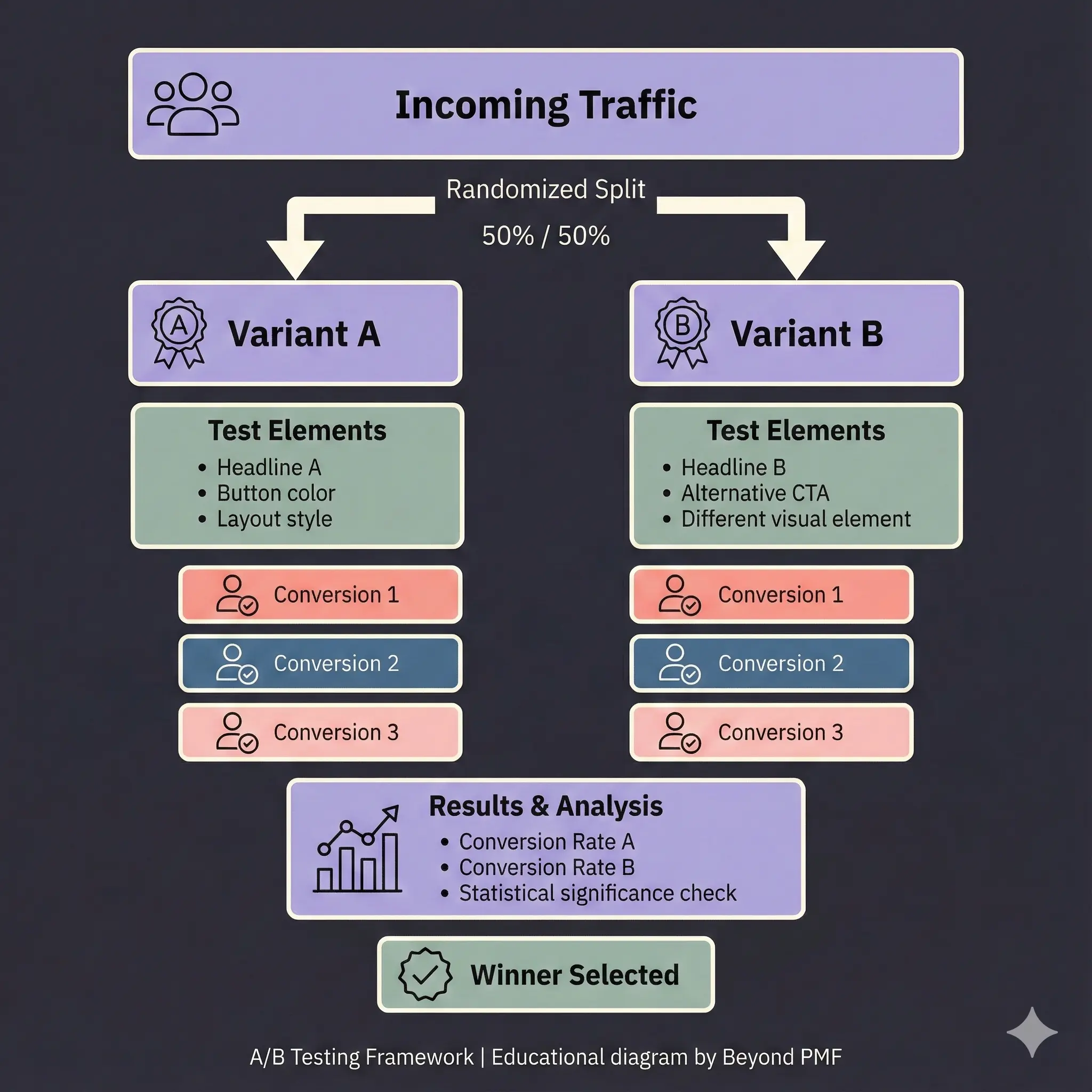
A/B Testing Framework is a methodical process used to compare two versions of a webpage or app to determine which one performs better.
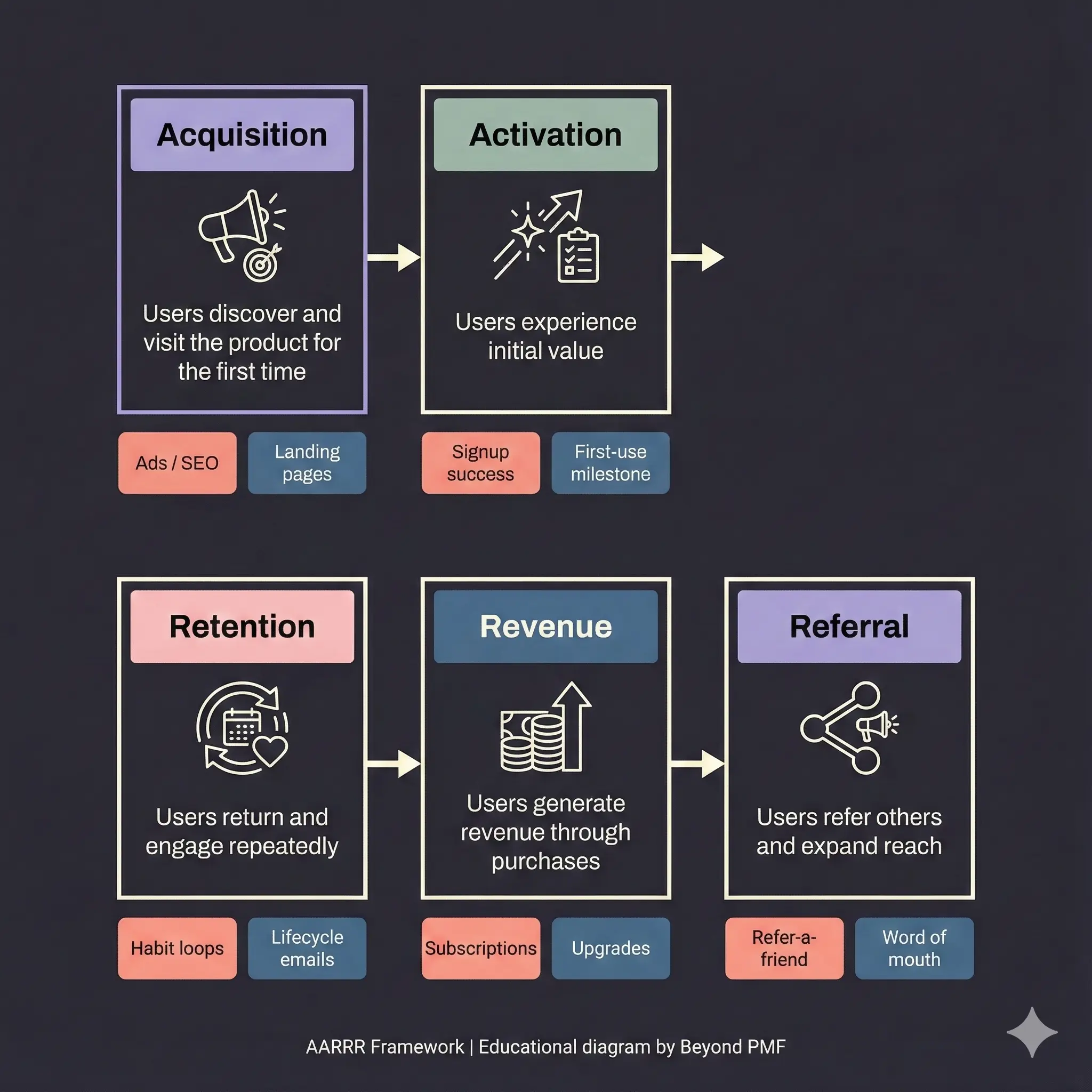
AARRR, or Pirate Metrics, is a framework used for measuring and optimizing the customer acquisition and retention processes in startups and growth marketing.
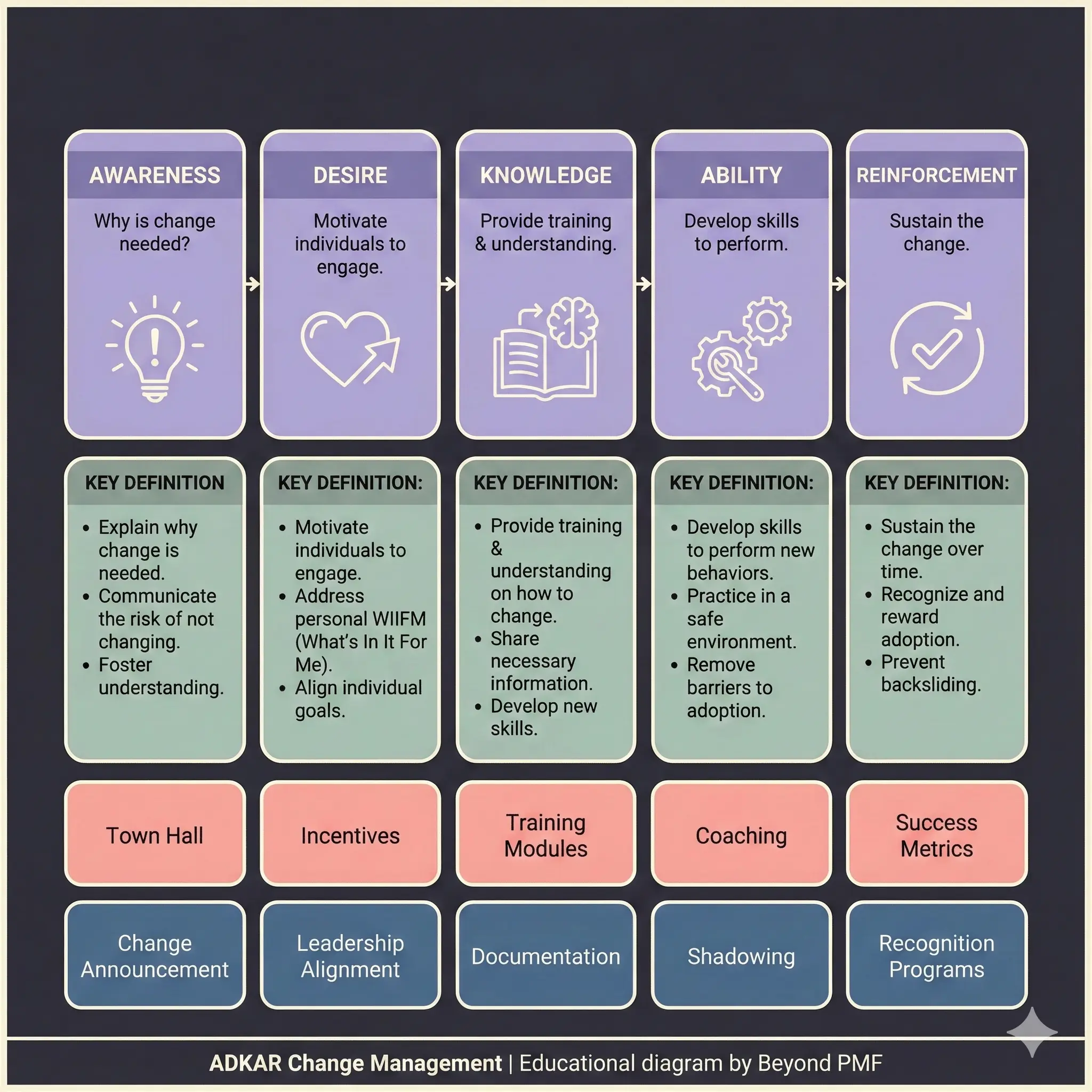
ADKAR Change Management is a goal-oriented framework that guides individual and organizational change.

This framework guides the development of AI and ML products from ideation to deployment, ensuring effective and scalable solutions.
The API-First Framework prioritizes the design and development of APIs before the implementation of software applications.
The Adopt Trial Assess Hold Framework is a strategic approach used by organizations to evaluate and implement new technologies or processes effectively.
The Agile Framework is a project management methodology that emphasizes flexibility, iterative progress, and stakeholder involvement.
The Agile Leadership Levels Framework by Joiner & Josephs describes how leaders evolve their mindset and behavior to effectively lead in increasingly complex, uncertain, and fast-changing environments.
The Agile Release Train (ART) framework is a method used in scaling agile practices to larger organizations by aligning teams to a common business and technology mission.
The Agile Scaling Framework helps organizations expand agile practices to larger, multi-team projects and departments.
Appreciative Inquiry is a change management approach that focuses on identifying what is working well, analyzing why it is working well and then doing more of it.
The AIDA model is a marketing framework used to guide consumers through the stages of the purchasing process.
Blue Ocean Strategy is a business framework that focuses on creating new market spaces, or 'blue oceans', rather than competing in oversaturated 'red oceans'.
Breakeven Analysis is a financial tool used to determine when a business or project will be able to cover all its expenses and begin making a profit.
Bridges' Transition Model helps organizations and individuals manage and understand the emotional transitions of change.
The Bullseye Framework is a systematic method for identifying the most effective marketing channels to grow a business.
Buy-a-Feature Prioritization is a collaborative decision-making process where stakeholders use a limited budget to 'buy' features they value most.
The CAGE Distance Framework helps businesses analyze the cultural, administrative, geographic, and economic distances between countries.
CRISP-DM stands for Cross-Industry Standard Process for Data Mining. It is a robust, widely used methodology for data mining projects.
The Cascade Strategy Framework is a tool used for aligning strategic objectives across different levels of an organization.
The Category Design Framework is a strategic approach used by businesses to create and dominate new market categories.
The Change Canvas is a visual tool designed to facilitate change management in organizations by mapping out necessary changes and their impacts.
The Core/Edge Innovation Framework helps organizations balance exploitation of existing business capabilities and exploration of new opportunities.
Critical Path Analysis (CPA) is a project management tool that identifies the longest sequence of dependent tasks necessary to complete a project.
The Cross-Functional Team Framework facilitates collaboration across different departments to achieve specific organizational goals.
Crossing the Chasm is a marketing model that addresses the challenges startup companies face when transitioning from early adopters to mainstream customers.
The Customer Acquisition Framework is a strategic model used by businesses to gain new customers efficiently.
The Customer Feedback Loop Framework is a systematic approach to collecting, analyzing, and responding to customer feedback to enhance product or service quality.
The Customer Segmentation Framework is a strategic tool used to divide a customer base into groups of individuals that are similar in specific ways relevant to marketing.
The DACI Decision Framework is a tool used to streamline decision-making processes in teams by assigning clear roles and responsibilities.
The DECIDE Framework is a decision-making model that helps organizations make informed choices by systematically evaluating options.
The DICE Framework is a tool used to evaluate the likelihood of success of projects and change initiatives within an organization.
The DSDM Framework is an agile project delivery framework, emphasizing continuous user involvement and iterative development.
DIDM is a strategic approach that integrates data analysis into the decision-making process to enhance business outcomes.
Disciplined Agile Delivery (DAD) is a process decision framework that enables simplified process decisions around incremental and iterative solution delivery.
The Disruptive Innovation Theory Framework explains how smaller companies can successfully challenge established incumbents in the market by innovating.
Distribution Channel Analysis is a strategic approach to evaluating the pathways through which products reach consumers.
Doblin's Ten Types of Innovation is a framework that outlines ten distinct avenues for achieving business innovation, enhancing competitive advantage and increasing value.
Dual-Track Agile is a development framework that integrates discovery and delivery activities concurrently to accelerate product development and ensure alignment with user needs and business goals.
Dual-Track Development is an agile framework that separates discovery and delivery tracks to optimize product development.
The Emotional Design Framework is a method used to create products that elicit specific emotional responses from users to enhance user experience and engagement.
The Expansion Readiness Assessment is a strategic tool used by businesses to evaluate their capacity and readiness for expansion into new markets or product lines.
Extreme Programming (XP) is an agile software development methodology aimed at producing higher quality software and higher quality of life for the development team.
The Feature Adoption Matrix is a tool used to assess and prioritize the adoption of new features based on user engagement and value.
The Feature Bucket Framework is a method for prioritizing product features based on different categories or 'buckets'.
The Feature Factory Framework is a methodology used in software development to streamline and accelerate the production of new features.
Fibonacci Sequence Scoring is a technique used to estimate the size, complexity, or effort required for tasks in project management and software development.
The Focus-Pocus Framework is a strategic tool designed to enhance organizational focus and productivity through targeted actions and mindfulness techniques.
The Four Ps Framework, also known as the Marketing Mix, is a tool used to consider different aspects of a market offering.
Funnel Analysis is a method used to understand and optimize various stages of a process, commonly applied in marketing and sales.
GIST Planning is a flexible framework for strategic planning and execution, focusing on iterative goal setting and testing.
Gantt Charts are visual tools used in project management to illustrate project schedules, showing start and finish dates of elements.
A Go-to-Market (GTM) strategy template outlines the approach a company uses to launch products effectively in new or existing markets.
The Growth Diamond is a strategic framework designed to enhance business growth through a multi-faceted approach.
The Growth Engine Framework is a strategic approach designed to drive business growth by systematically enhancing key aspects of the organization.
Growth Loops are a strategic framework used to drive business growth by creating self-sustaining marketing mechanisms.
The HYPE Innovation Framework is a structured approach to managing and fostering innovation within organizations.
This framework guides the planning and design process of software systems, dividing it into conceptual (high-level) and detailed (low-level) stages.
Hoshin Kanri is a strategic planning process that helps organizations align their objectives with their long-term goals.
The Hybrid Agile Framework combines traditional project management methodologies with agile practices to create a flexible approach to project management.
The INVEST Criteria is a set of guidelines used to assess and ensure the quality of user stories in agile software development.
The IPA Matrix is a strategic tool used to prioritize projects or tasks by categorizing them based on their impact and the effort required to implement them.
The Implementation Pattern Framework is a strategic tool used to guide the deployment of new systems or processes within an organization.
The Improvement Kata is a systematic, scientific routine that helps organizations achieve their goals.
The Information Architecture Framework is a strategic tool used to organize and structure information effectively.
The Innovation Accounting Framework is a method to measure and evaluate the progress of innovative projects, particularly in uncertain environments.
The Innovation Funnel Framework is a systematic approach to managing and refining new ideas into viable products or services.
The Innovation Management Framework is a strategic tool used to foster and manage innovation within organizations.
The Innovation Pipeline Framework is a systematic approach to manage and streamline the development of new ideas into marketable products or services.
The Innovation Process Framework is a systematic approach to developing new products, services, or processes, focusing on creativity and structured innovation.
The Innovation Value Chain is a framework that helps organizations manage and enhance their innovation processes from idea generation to implementation.
Integrated Product Development (IPD) is a holistic approach that synchronizes all aspects of product development to enhance efficiency and innovation.
The Interface Design Framework is a systematic approach to creating user interfaces that are both functional and user-friendly.
The Internal Rate of Return (IRR) framework is a financial tool used to evaluate the profitability of potential investments.
The Internationalization Framework guides companies in adapting their operations and strategies to enter and thrive in foreign markets.
The Intrapreneurship Framework fosters innovation within an organization by empowering employees to act like entrepreneurs.
The Iterative Development Framework is a process that emphasizes repetition and refinement in software development.
JAD is a process used in the software development lifecycle to facilitate collaboration between stakeholders and systems analysts.
Journey-Based Innovation is a customer-centric approach that focuses on enhancing the user experience by mapping out and innovating at every stage of the customer journey.
Judgmental Forecasting leverages expert opinions to predict future events, primarily when historical data is insufficient or irrelevant.
Just Enough Architecture focuses on balancing design complexity with practical implementation in software development.
Keeley's Ten Types of Innovation is a framework that outlines ten distinct avenues for achieving business innovation, ranging from product performance to business model adjustments.
Kotter's 8-Step Model is a change management framework designed to help organizations implement successful transformations.
Large-Scale Scrum (LeSS) is a framework for scaling agile processes to larger organizations and multiple teams.
The Launch Readiness Checklist ensures all critical elements are addressed before a product or service launch.
The Lean Startup Build-Measure-Learn loop is a method for developing products and services by building a minimum viable product, measuring its effectiveness in the market, and learning from the results.
Lewin's Unfreeze-Change-Refreeze is a model of change management that guides organizations through the process of implementing change effectively.
The Localization Framework guides businesses in adapting their products and services for different geographical and cultural contexts.
The Logical Framework Approach (LogFrame) is a project management tool used to improve project planning and execution.
The Loyalty Ladder is a marketing framework used to develop customer loyalty by moving them through different stages of engagement.
Market Sizing (TAM) is a framework used to estimate the total market demand for a product or service.
MMF is a concept in software development that identifies the smallest set of features in a product that delivers significant value to users.
Minimum Viable Architecture (MVA) is a strategic approach in system design that focuses on the minimal set of architectural elements needed to meet initial requirements.
The Mission Command Framework is a management approach that emphasizes decentralized decision-making and leadership to achieve strategic objectives.
The Mission Model Canvas is a strategic tool adapted from the Business Model Canvas to fit the unique needs of mission-driven organizations such as public agencies and nonprofits.
The New Product Development (NPD) Framework is a systematic process used to turn innovative ideas into marketable products.