
Testing assumptions and reducing risk before scaling.
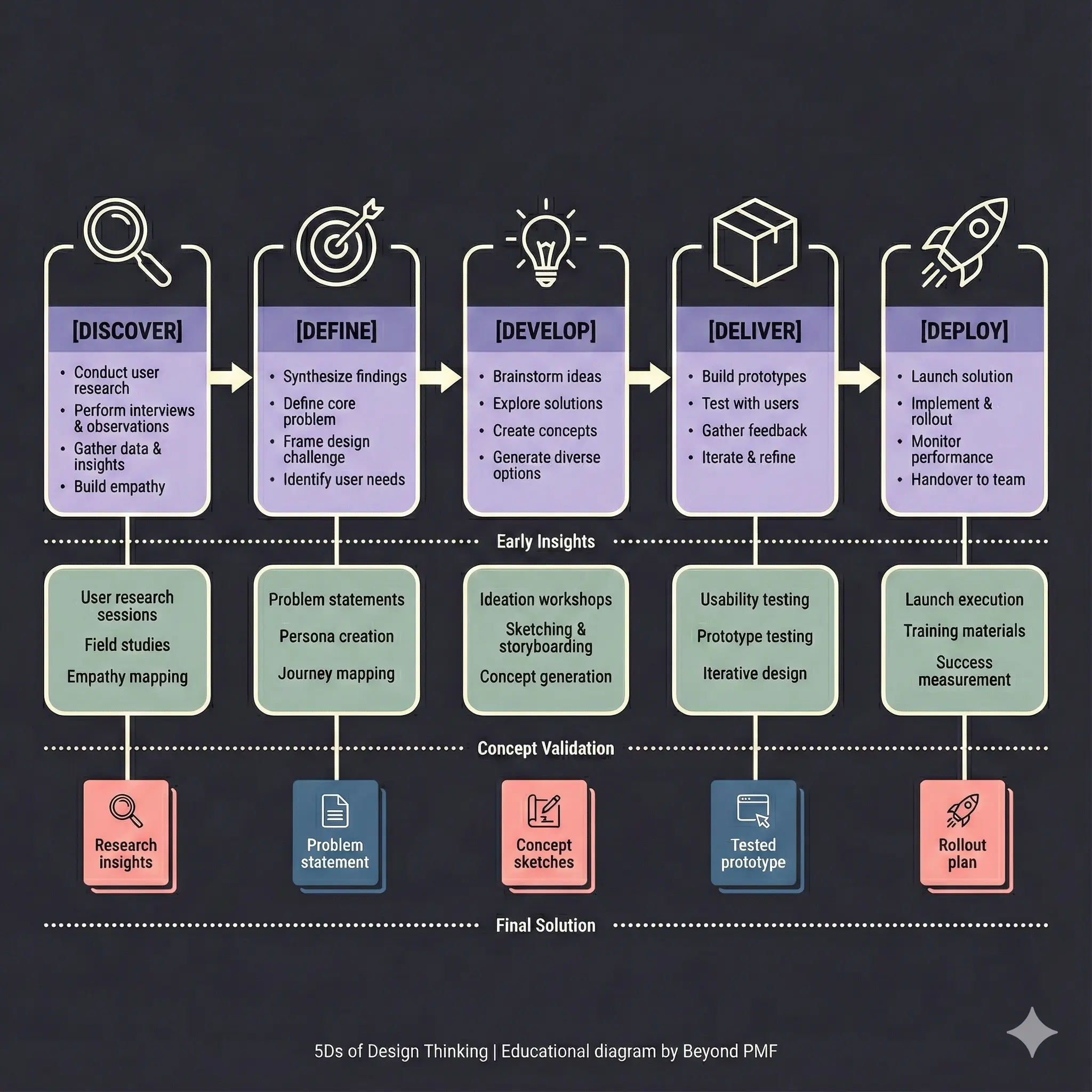
The 5Ds of Design Thinking is a framework that guides teams through the process of innovation and problem-solving using design principles.

ATAM is a method used to evaluate software architecture against quality attributes. It helps in identifying architectural risks that could undermine a system's objectives.
Assumption Mapping is a strategic tool used to identify and test the validity of assumptions in a project or business idea.
Best-Worst Scaling is a method for obtaining preference or importance scores for multiple items.
The Build-Measure-Learn Loop is a core component of the Lean Startup methodology, designed to help businesses rapidly discover and validate ideas.
The Business Analysis Framework is a systematic approach used to identify business needs and determine solutions to business problems.
The CIRCLES Method is a structured approach used for product design and user experience evaluation.
Cognitive Task Analysis (CTA) is a method used to capture and document the complex mental processes and skills experts use to perform tasks.
Conjoint Analysis is a statistical technique used in market research to determine how people value different attributes of a product or service.
The Continuous Discovery Framework is a user-centered approach in product development that emphasizes ongoing interaction with customers to validate ideas and ensure product-market fit.
The Critical Incident Technique (CIT) is a qualitative research method used to gather facts about significant occurrences from direct observations.
The Customer Development Model is a business framework used to discover and validate the right market for a product, build the right product features, and test the correct sales and marketing tactics.
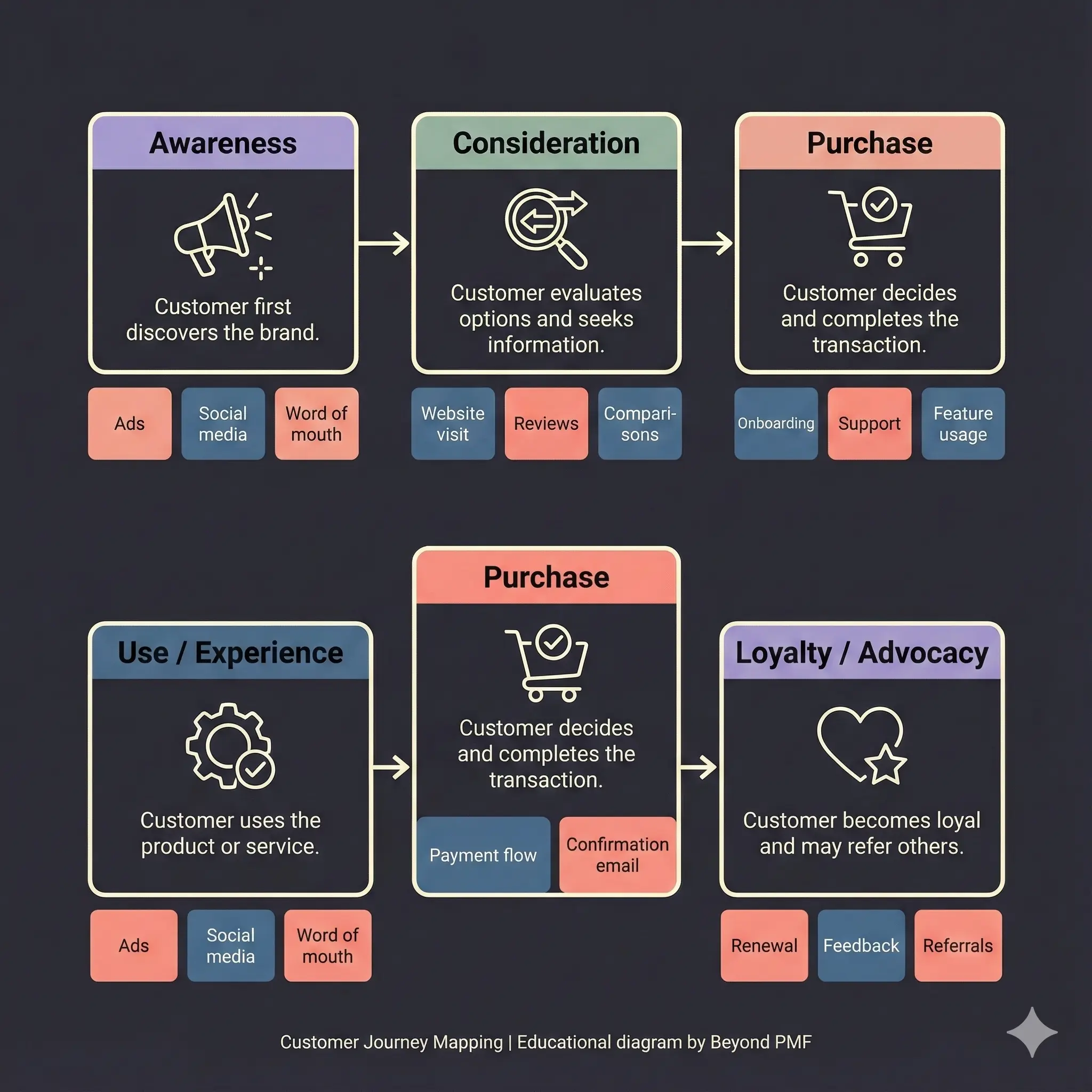
Customer Journey Mapping is a visual representation of every experience your customers have with you. It helps to tell the story of a customer's experience with your brand from initial engagement and into hopefully a long-term relationship.
Customer Value Chain Analysis is a framework used to dissect and understand the series of steps a customer goes through when interacting with a company's product or service.
The Design Sprint is a five-day process for answering critical business questions through design, prototyping, and testing ideas with customers.
Design Thinking is a user-centric approach to problem-solving that encourages innovation and creativity through iterative design.
Discovery Sprints are intensive, time-boxed sessions aimed at quickly developing insights and solutions for specific business challenges.
Emergent Strategy focuses on developing strategies from the ground up, allowing for adaptability and responsiveness to real-time changes.

Empathy Mapping is a collaborative visualization tool used to articulate user attitudes and behaviors.
Event Storming is a collaborative, visual modeling technique used to explore complex business domains and design software systems.
Experience Maps visualize the complete journey a user or customer has with a product or service, highlighting key interactions and emotions.
The Experience Sampling Framework is a research method used to collect data about participants' behaviors and experiences in real time.
The Feasibility/Desirability/Viability framework is a strategic tool used to evaluate new products, services, or business ideas based on three key aspects: feasibility, desirability, and viability.
The Feature Tree framework is a visual tool used to organize and prioritize product features.
The Feature Value Matrix is a tool used to evaluate and prioritize product features based on their value and impact.
The Fogg Behavior Model (FBM) is a framework for understanding human behavior through the convergence of motivation, ability, and prompts.
Force Field Analysis is a decision-making technique used to identify and analyze the forces that support or oppose a particular change.
Heuristic Evaluation Framework is a usability inspection method used to identify usability problems in a user interface design.
Human-Centered Design (HCD) is a creative approach to problem-solving that starts with people and ends with innovative solutions tailored to meet their needs.
The Hypothesis Testing Framework is a methodical approach used to determine if there is enough evidence to reject a hypothesis in favor of an alternative.
IDEO Design Thinking is a user-centered approach to innovation that integrates the needs of people, the possibilities of technology, and the requirements for business success.
The Influence Diagram Framework is a visual tool used to model decision-making processes, highlighting the relationships between decisions, uncertainties, and objectives.
The Innovation Labs Framework is a structured approach to fostering innovation within organizations by creating dedicated spaces and teams focused on exploring new ideas and technologies.
The Innovation Matrix is a tool used to categorize and prioritize innovation initiatives based on their novelty and implementation complexity.

Jobs to Be Done (JTBD) is a framework that helps companies understand customer needs by focusing on the 'jobs' customers are trying to accomplish.
The Jobs-to-be-Done Timeline framework helps businesses understand customer motivations and behaviors over time.
Joint Requirements Planning (JRP) is a process used in project management to facilitate the collection and agreement of system requirements among stakeholders.
Journey Mapping is a visual representation of the process that a person goes through to accomplish a goal.
Lean UX focuses on rapid design iteration and user feedback to create better products.
The MVP Definition Canvas is a strategic tool used to outline and prioritize the minimal viable product features for startups.
The Mental Models Framework is a cognitive tool that helps individuals and organizations simplify complex realities by using internal representations of external reality.
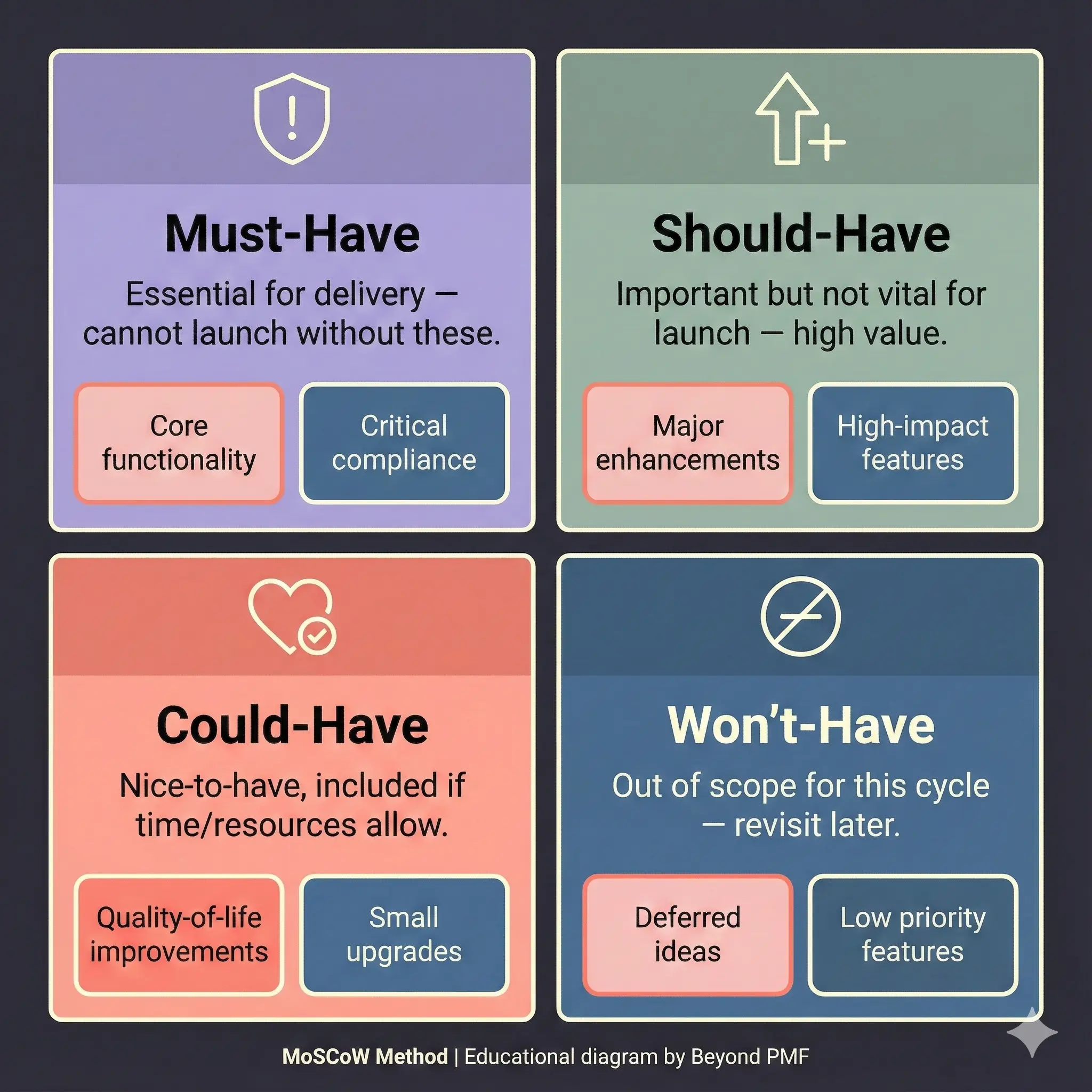
The MoSCoW Method is a prioritization technique used in project management and software development to reach a common understanding on the importance of delivering each requirement.
Needfinding (Needs Analysis) is a process used to identify and understand the needs of users or customers to inform product or service development.
The Opportunity Assessment Template helps organizations evaluate potential business opportunities systematically.
Opportunity Scoring is a strategic framework used to evaluate and prioritize business opportunities based on their potential value and alignment with business objectives.
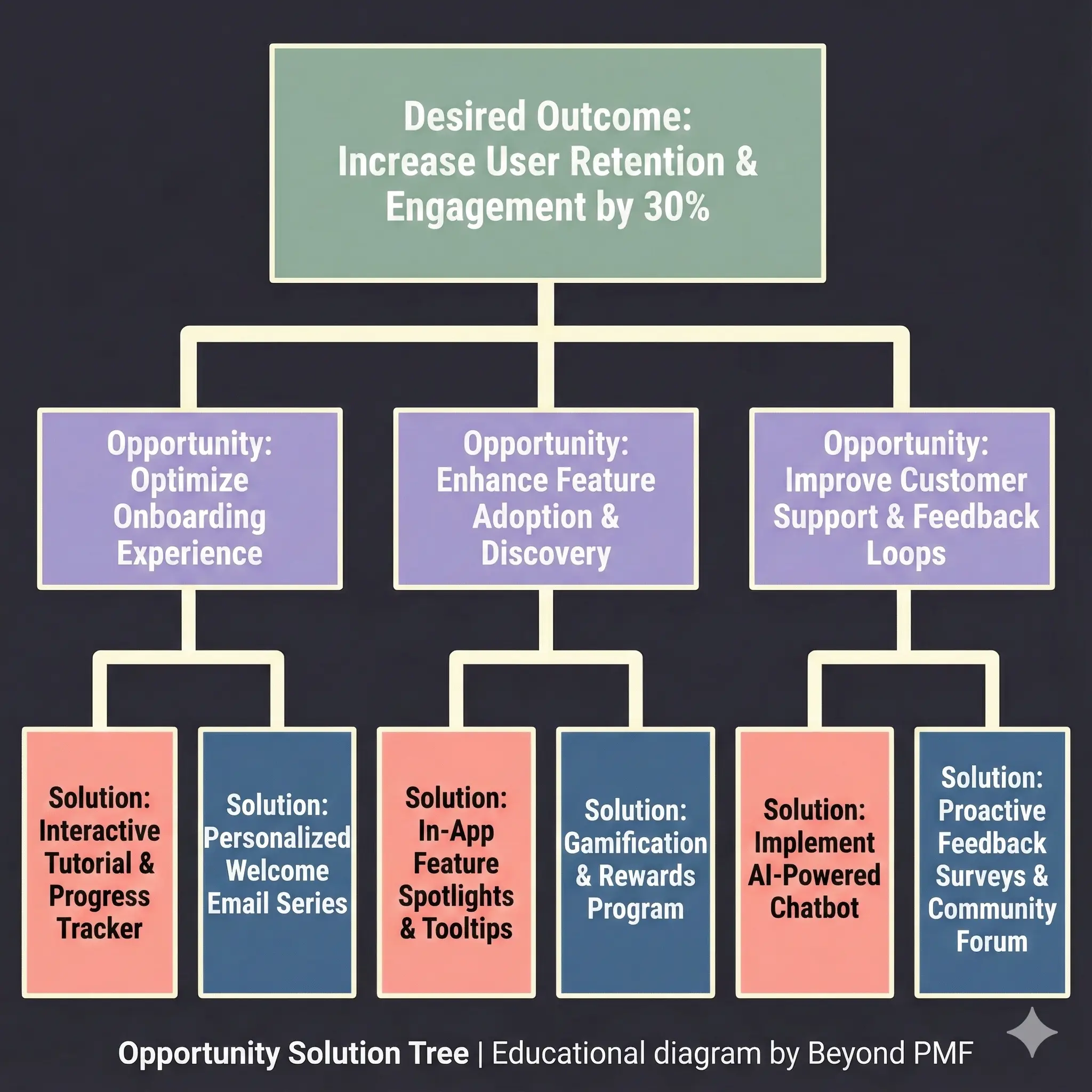
The Opportunity Solution Tree is a visual framework used to map out the best paths from a problem to a solution, focusing on customer needs and potential opportunities.
Personas are fictional characters created to represent different user types within a targeted demographic, attitude, and behavior set.
The Price Sensitivity Meter (PSM) is a market research tool used to determine optimal pricing levels for products or services.
The Problem Solution Fit Canvas is a strategic tool used to align customer problems with potential solutions.
User Flow Analysis is a method used to evaluate the steps a user takes within a software or service to complete a task.
The User Research Framework is a systematic approach to gather, analyze, and interpret user data to inform design and business strategies.
User-Centered Design (UCD) is a design philosophy and process in which the needs, wants, and limitations of end users are given extensive attention at each stage of the design process.
The Value Innovation Framework is a strategic tool designed to help organizations create new market spaces by delivering exceptional value to customers while reducing costs.
The Value Proposition Calculator is a tool used to quantify and evaluate the value offered by a product or service to its customers.
The Value Proposition Canvas is a tool that helps businesses align their products or services with customer needs and desires.
The Voice of Customer (VOC) Matrix is a tool used to translate customer needs into actionable business requirements.
The Weighted Scoring Model is a decision-making tool used to compare different options based on multiple criteria.